

Have you ever wondered how a quick four-digit number can bring order to busy skies? Squawk codes help air traffic controllers and pilots stay in sync. Each aircraft uses a unique number on radar to show who is who. This makes it easier to manage takeoffs, transfers, and even emergency alerts. In short, squawk codes boost communication and safety, turning hectic airspace into a more organized and secure place.
Understanding Aviation Squawk Codes in Air Traffic Control
Squawk codes are four-digit numbers from 0000 to 7777 that help each airplane stand out on radar. These codes are sent by Mode A/C transponders. In Mode A, the transponder sends just the assigned number, while Mode C also sends pressure-altitude data in hundreds of feet. This setup helps air traffic controllers tell one aircraft from another, especially when the skies get busy. For example, a pilot uses cockpit controls to set his code, and controllers update or change it when managing departures, handoffs, or arrivals.
These codes are key for keeping track of planes in real time. Controllers check the squawk codes on both primary and secondary radars to see aircraft positions. If something changes with a plane or a special alert is needed, ATC can quickly update the squawk code. This clear system helps avoid mix-ups among many aircraft. Pilots and controllers follow transponder guides to set or change codes so everyone is on the same page during each flight phase.
Squawk codes keep operations safe from takeoff to landing. They help with ATC signal alerts and are important when communication problems occur.
Key functions of squawk codes include:
- Identifying individual aircraft on radar
- Alerting controllers to special flight conditions
- Supporting safe sequencing during departures and arrivals
- Assisting in procedures when communications fail
- Providing real-time tracking for air traffic management
Emergency and Unlawful Interference Squawk Procedures
Pilots and controllers use three key emergency squawk codes set by the International Civil Aviation Organization (ICAO) and the Federal Aviation Administration (FAA). Code 7700 signals a general emergency like a medical issue or a mechanical problem. Code 7600 warns of a radio communication failure. Code 7500 shows that there may be unlawful interference, such as a hijack. When any of these codes is set, alert flags appear on controllers' screens, and emergency procedures start right away.
Once an emergency code is active, air traffic controllers follow strict steps to secure the airspace. They check their radar to confirm the code change and then roll out the necessary actions for safety. For Code 7500, the process includes notifying national authorities, possibly setting up military interceptors, and diverting the flight to a safe, pre-assigned airport. These steps keep a clear command chain and a quick response.
| Code | Meaning | Controller Action |
|---|---|---|
| 7700 | General Emergency | Trigger emergency response procedures |
| 7600 | Radio Communication Failure | Guide the aircraft on its last assigned route |
| 7500 | Unlawful Interference/Hijack | Notify national authorities and plan interception |
Hijack and Unlawful Interference Procedures
Squawk Code 7500 is a quiet signal that something like a hijack is happening. When pilots set this code, they are alerting controllers that immediate help is needed. Controllers see the alert and quickly contact national security teams. This early warning lets agencies prepare interceptor aircraft and plan diversion routes.
After Code 7500 is activated, pilots follow a silent cockpit protocol, avoiding any announcements and sticking to strict radio discipline. This helps keep communications secure while authorities get ready to respond. Meanwhile, controllers start redirecting the flight to a safe, designated airport to ensure a secure landing.
ATC and security teams work together closely when a hijack alert occurs. They track the aircraft’s last known position, coordinate with military interceptors if needed, and keep steady communication with all ground agencies. This coordinated effort ensures that any unlawful interference is handled quickly and safely for everyone involved.
Communication Failure and Radio Malfunction Squawk Codes
Pilots rely on squawk codes to alert air traffic controllers about issues with their equipment or radio links. For instance, if a pilot encounters code 7600, it means they've lost radio contact. In that case, the pilot sticks to the last assigned route and altitude while preparing to land at the nearest suitable airport.
Other codes point to different problems. Code 7700 shows a general emergency. Code 7500 warns controllers about a hijacking threat. Code 7400 is used when there's a visual failure under special flight rules. And code 7200 signals an altitude deviation, often in military or air traffic control settings.
| Code | Meaning |
|---|---|
| 7600 | Lost radio communications |
| 7700 | General emergency |
| 7500 | Hijack alert |
| 7400 | Visual failure under special flight rules |
| 7200 | Altitude deviation (military/ATC context) |
Standard Non-Emergency and Special-Purpose Squawk Assignments
Routine squawk assignments serve as daily guides for managing air traffic. In the United States, pilots flying by sight (VFR) use the code 1200, while in Europe, they typically use 7000. These numbers come from a standard list that helps controllers keep track of each aircraft on radar. Using these codes helps controllers sync with visual navigation and safety systems, making busy airspace easier to manage.
Some flights need special codes because they don't follow the usual passenger or cargo patterns. Calibration, training, and survey flights, for example, get unique numbers like 2000 or 4000. This tells air traffic controllers that these planes are on specific tasks, such as instrument checks or operational training. Temporary codes also come into play during aerial surveys or military drills, where careful coordination is key.
Military exercises and other special missions sometimes receive temporary codes to set them apart from regular flights. These numbers are assigned carefully to avoid confusion and keep our skies safe. Squawk codes continue to be essential in guiding flight safety and ensuring smooth operations for both routine and special flights.
Regulatory and Assignment Procedures for Squawk Codes
FAA rules say every aircraft in controlled airspace must use a transponder with a squawk code. This lets controllers see every flight on their radar and helps keep air traffic safe and organized. The transponder policy clearly explains what pilots and controllers need to do at key flight times.
ICAO Annex 10, Volume IV sets global rules for squawk codes. It provides a number-based standard (a simple way to assign codes) that all signatory nations follow. This consistency makes it easier for pilots and controllers to understand each other when flying across borders and helps keep everyday flights and unusual events safe.
European authorities, through the European Aviation Safety Agency, add extra rules for regional squawk code assignments and changes. Flight plans often come with a requested code, and air traffic controllers can adjust these based on current traffic or specific needs. These flexible rules make sure that even when changes are needed, overall air traffic management stays safe and efficient.
Digital Tracking and Real-Time Squawk Monitoring Tools
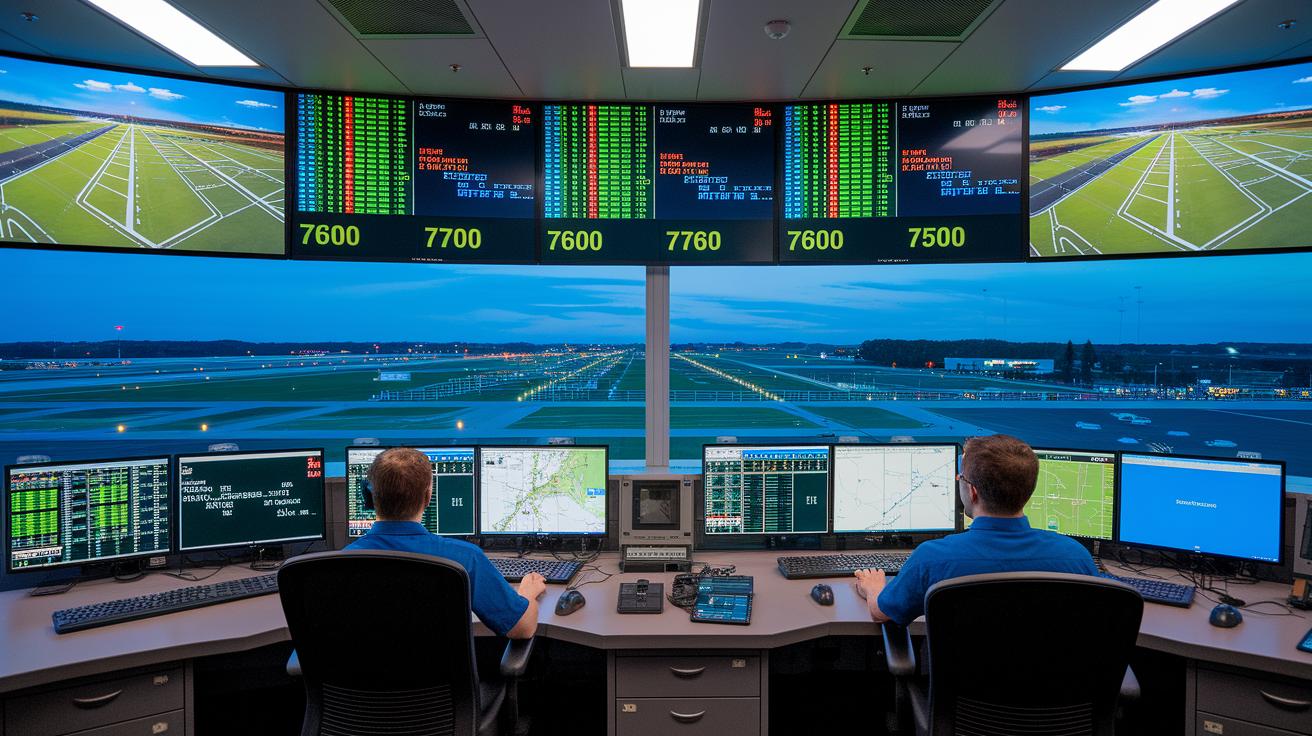
Modern digital systems use tools like ADS-B (which sends out live aircraft data) and MLAT (which figures out an aircraft’s position using signals from several sources) to capture squawk code information. They grab data straight from an aircraft’s transponder and show it on digital maps in real time. Emergency codes like 7700, 7600, and 7500 are flagged right away by filtering tools. For example, one system might show: "Alert: Code 7600 active on Flight AA123 – pilot has lost radio contact." This clear message helps controllers start the proper emergency steps immediately.
Dispatch centers and mobile apps take things a step further by collecting signals from ground-based networks. When an emergency squawk happens, mobile apps send push notifications to the right teams. This integration allows teams to keep an eye on both regular flights and urgent cases through live digital tracking. By feeding transponder data continuously, aviation professionals can spot unusual or distressing activity quickly, helping everyone stay safe in the skies.
Final Words
In the action, this article broke down aviation squawk codes and how they work in various air traffic scenarios. It explained how emergency codes like 7700, 7600, and 7500 kick in during unexpected events. The post also reviewed routine squawk assignments and the regulatory framework behind code operations. Real-time tracking tools and digital monitoring solutions were covered too.
Keep these insights in mind next time you fly, and rest easy knowing these aviation squawk codes help keep the skies safe and organized.
FAQ
What are aviation squawk codes?
The aviation squawk codes are four-digit octal numbers set by pilots through a transponder to uniquely identify an aircraft on radar, helping controllers manage traffic.
How do pilots use squawk codes during emergencies?
Pilots set squawk codes like 7700 for a general emergency, 7600 for radio failures, and 7500 for unlawful interference, alerting air traffic control to take specific safety actions.
How is a radio communication failure signaled?
The radio failure is indicated by squawk code 7600, which tells controllers that the pilot has lost radio contact, prompting the pilot to maintain the last route and altitude.
What are standard non-emergency squawk code assignments?
Standard squawk assignments include codes like 1200 for U.S. VFR flights and 7000 for European VFR flights, while unique codes support special-purpose operations like training or calibration flights.
What regulatory guidelines govern squawk code usage?
Regulatory bodies like the FAA, ICAO, and EASA require all aircraft in controlled airspace to use squawk codes, ensuring proper transponder operation and adherence to international safety standards.
How do digital tracking systems use squawk codes?
Digital platforms, using ADS-B and MLAT, capture squawk code data to provide real-time flight tracking, alert emergency protocols, and enhance situational awareness for dispatch centers.