

Have you ever wondered how planes refuel while still in the air? They use a process called in-flight refueling that lets fighter jets, bombers, and support planes stay airborne longer. Pilots use special systems to refuel mid-flight. One method uses a probe-and-drogue, which looks a bit like a small shuttlecock. Another method uses a flying boom, a long tube that connects to the airplane. In both cases, the pilots fly very close together to pump fuel safely. This process saves time on the ground and makes military and commercial flights more efficient. It all comes down to teamwork and skilled flying high above the ground.
Core Principles of Airplane Refueling in Air
Mid-flight refueling lets aircraft fly longer and handle more flexible missions. This process keeps planes in the air without landing, which is key for military operations and helps commercial fleets work more efficiently. Fighter jets, bombers, and support planes can quickly adjust their missions, cover extra miles, and stay mission-ready with less downtime on the ground.
There are two main systems for refueling in the sky: the probe-and-drogue and the flying boom. In the probe-and-drogue system, a flexible hose ends in a drogue that looks like a shuttlecock. This drogue steadies the fuel stream and helps the receiving aircraft’s probe get in the right spot. On the other hand, the flying boom system uses a rigid, telescoping tube that a boom operator carefully pilots into place. This system can pump fuel at up to 1,000 gallons per minute. Both setups use pressurized pumps and careful throttle adjustments to keep the fuel flowing safely.
Successful refueling in the air means pilots from both the tanker and the receiving plane need to fly in tight formation and talk clearly with each other. They maintain set distances on all sides to keep everything stable. Once the planes line up correctly, they follow a set process: checking in over radio and visually, connecting the fuel line, starting the pumps, closing the valves, and finally retracting the boom or disconnecting the probe once the fuel has been transferred.
Historical Milestones in Airplane Refueling in Air
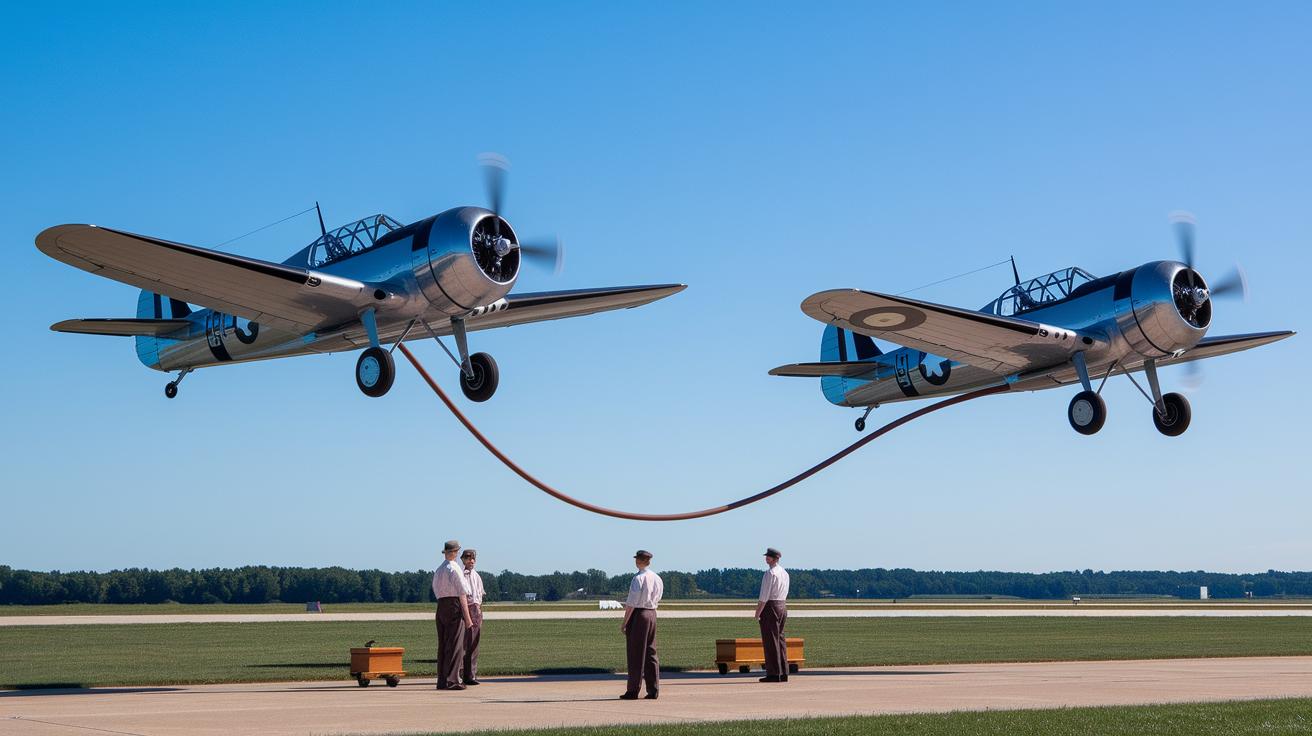
Early tests of in-flight refueling began in the 1920s. Pioneers used hoses to transfer fuel between planes during record-setting flights. These early tests helped planes fly longer and encouraged more research on mid-air refueling.
| Year | Milestone |
|---|---|
| 1923 | First experimental hose-to-hose refueling |
| 1966 | Palomares KC-135/B-52 collision |
| 2026 | B-21 Raider public refueling demo |
Over the years, experts developed clear procedures that lowered risks and set up simple breakaway plans for emergencies. These guidelines have been important for both the U.S. Air Force and the U.S. Navy. The KC-135 at Edwards Air Force Base played a key role in proving that long-duration refueling was possible. This breakthrough helped improve carrier support and made missions more flexible. Today, these milestones influence how in-flight refueling is done safely and efficiently, and they pave the way for future innovations in mid-air fueling.
Equipment and Techniques for Airplane Refueling in Air
The probe-and-drogue system uses a flexible hose with a drogue that now comes with sensors to keep it steady during refueling. Even though the basic idea is the same as in the past, today’s versions include smart fuel controls that adjust themselves and fine-tuned nozzles that help prevent leaks. This system started with military planes in the 1950s and has grown to use real-time feedback for better performance. A pilot might say, "I adjusted my approach until the sensor feedback confirmed a secure connection."
The flying boom system relies on a rigid, telescoping arm that an operator guides. Newer models feature computerized help to track pressure and correct the arm’s angle on the fly, even when wind conditions change. Originally developed to fix issues with older systems, today’s booms automatically optimize performance for steady fuel transfer. A boom operator could share, "The system shifts the boom angle automatically when sudden wind changes occur, ensuring a secure connection."
| Feature | Probe-and-Drogue | Flying Boom |
|---|---|---|
| Flow rate | Can fuel several aircraft at once | Transfers fuel at rates up to 1,000 gallons per minute |
| Docking complexity | Relies on aerodynamic matching for alignment | Needs both computerized and manual adjustments |
| Simultaneous refueling capacity | Supports connections with more than one aircraft at a time | Connects to only one aircraft at a time |
Safety Protocols in Airplane Refueling in Air
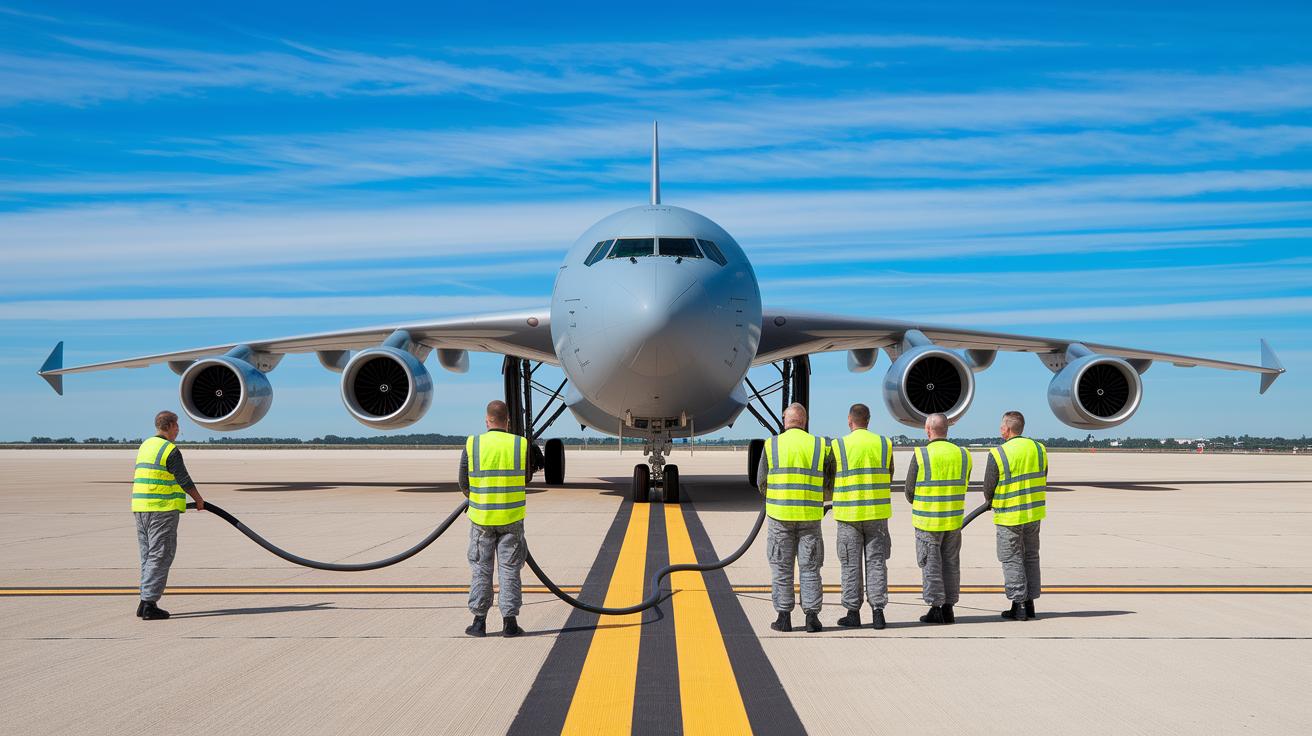
Airplane refueling has strict safety rules to keep everything secure. Every move is planned to avoid problems during fuel transfers. Crews follow clear steps to keep safe distances on all sides between aircraft. This careful plan helps prevent accidents and makes fuel delivery smooth, even when flying fast.
When refueling, both the tanker and the receiving aircraft must hold exact positions. Crews start by checking both visually and on the radio. Next, they slowly line up the fuel probe or boom with the receiving port. Only then do they start the pressurized pump and lock the valves. This step-by-step method makes sure each part of the connection is safe before fuel moves at high pressure.
Pilots and boom operators train hard for every situation. They practice in simulators and real flights to get their skills just right. Their training focuses on lining up the aircraft, watching the fuel flow, and knowing how to break away quickly if needed. These drills help them handle sudden issues during refueling.
Emergency procedures are key for avoiding serious problems. If something goes wrong, like fuel leaking or sudden turbulence, the crew quickly follows breakaway steps. After disconnecting, they work fast to contain any leaks and inspect everything to ensure there are no dangers left.
Innovations in Airplane Refueling in Air
Recent breakthroughs in automated and self-refueling systems are reshaping how planes refuel mid-flight. The Airbus A330 MRTT made history by earning the first certification for automated daylight aerial refueling. This new system uses digital controls to manage fuel flow in real time, which means fewer chances for human error. Programs are now testing self-refueling pods and systems without a fuel boom. These efforts are part of a plan to merge next-generation tanker designs with fully automated in-flight fuel controls. Imagine sensors and onboard computers that instantly adjust fuel flow, keep pressure at the right level, and spot leaks without any manual help. That’s the future of airborne refueling.
Digital control panels in these modern systems are a key part of their success. On March 10, 2026, the B-21 Raider stealth bomber set a record by refueling for 5 hours and 33 minutes in mid-air using an NKC-135 tanker. Its digital fuel-management system monitored flow rates and pressure in real time, which made it possible to adjust fuel levels precisely, even in tough flight conditions. This tech not only extends the range of stealth bombers but also gives them more flexibility during complex missions. Operators now have digital dashboards that show fuel details instantly, helping them make quick calls during challenging maneuvers. Automated controls and digital monitoring are setting a new standard in mid-flight fuel transfers by driving higher efficiency and precision.
Operational Challenges and Case Studies in Airplane Refueling in Air
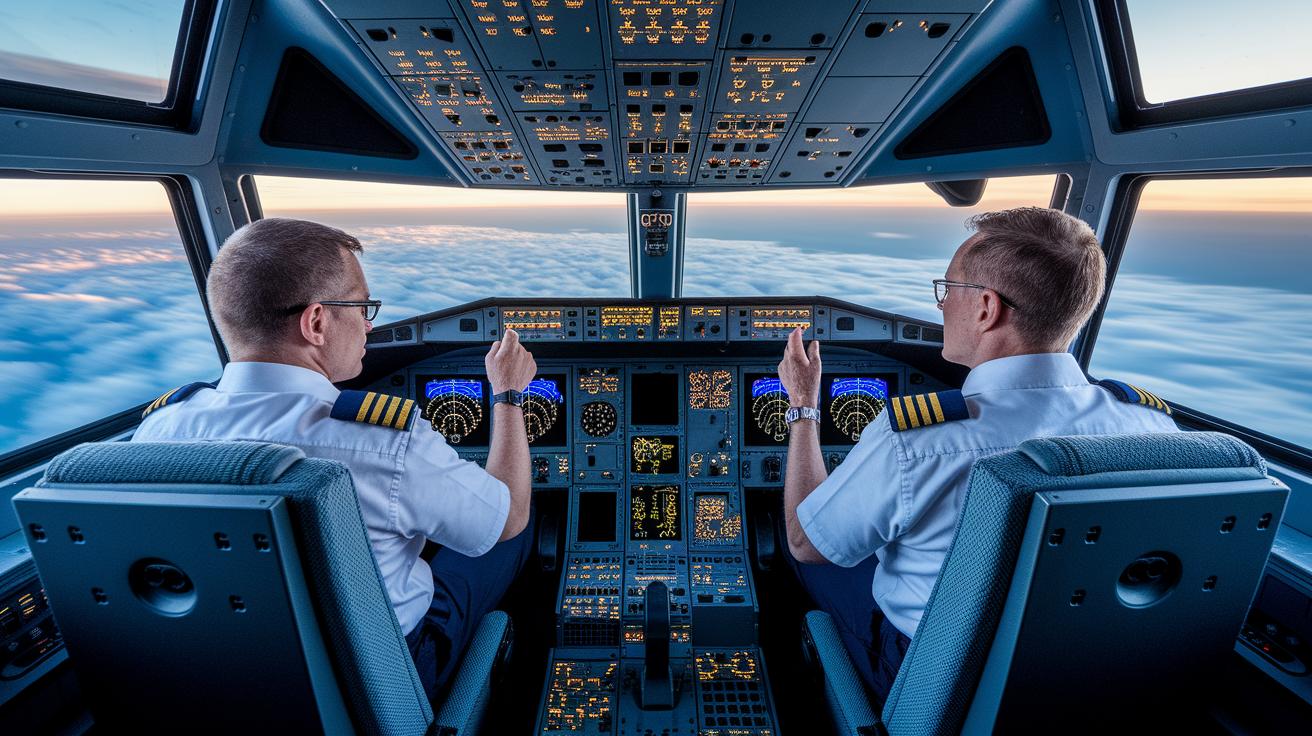
At heights above 30,000 ft, refueling can get tricky because the air is thinner. This thin air changes the fuel's thickness and makes the hose less steady, so lining up the probe becomes tougher. Even a small misalignment can break the flow of fuel. One pilot explained, "I had to adjust my approach repeatedly until the feedback confirmed a secure lock," showing how even tiny differences can cause problems.
Back in 1966, a small error in a tight formation led to a serious accident. A KC-135 tanker bumped into a B-52 bomber at 31,000 ft during refueling. The impact sparked a fuel ignition and caused major damage. This incident pushed improvements like more careful calibration, routes that steer clear of turbulence, and tighter maintenance checks. Today, these changes help lower risks and ensure that adjustments during refueling are closely monitored.
Tanker Aircraft Fleet and Logistics for Airplane Refueling in Air
The US Air Force uses tankers like the KC-135, NKC-135, and A330 MRTT to refuel aircraft mid-flight. The KC-135 and NKC-135 pump fuel at speeds up to 1,000 gallons per minute, while the A330 MRTT can refuel from several points using special pods. Each tanker is built with large fuel tanks, strong pumps, booms, and drogue pods to serve many different kinds of aircraft.
These tankers rely on secure data links and smart planning software to meet up with the aircraft that need fuel. Real-time coordination helps ensure the planes fly in close formation and start the refueling process smoothly. This digital system also cuts down on the risk of a misaligned connection during docking.
Tanker placement is planned based on local needs and existing fuel reserves to keep operations running for longer periods. Military planners use these advanced tankers to help extend mission times during long operations. With solid design and secure communications, the US tanker fleet stays agile and ready to back both fast-response and extended-range missions when every minute counts.
Final Words
In the action, we broke down key principles behind mid-flight fuel transfers. We looked at probe-and-drogue and flying boom methods and how precise formation flying and controlled sequences keep missions safe.
This guide also touched on modern upgrades and historical milestones that shape today's operations. It all makes airplane refueling in air a step toward smoother, less stressful travel. The outlook is promising for those seeking better travel decisions.
FAQ
Is it possible to refuel a plane in the air and how do airplanes achieve mid-air refueling?
Airplanes can refuel mid-air by using either a probe-and-drogue or flying boom system. These methods involve coordinated formation flight where a tanker transfers fuel to a receiving aircraft.
What aircraft perform aerial refueling for other planes?
Military tanker aircraft like the KC-135, NKC-135, and Airbus A330 MRTT perform aerial refueling. They use specialized systems to safely transfer fuel during coordinated flight.
How long can a plane stay in the air with refueling?
Mid-air refueling extends flight duration by replenishing fuel without landing. This allows aircraft to remain aloft for extended missions, limited only by fuel management and crew endurance.
What causes mid-air refueling accidents?
Mid-air refueling accidents typically result from slight misalignments, communication errors, or equipment failures. These issues can disrupt the precise connection needed for a safe fuel transfer.
Can helicopters refuel in the air?
Although in-flight refueling is uncommon for helicopters, specialized techniques exist for aerial fuel transfer. Most helicopters refuel on the ground due to design and operational differences.
What does an airplane refueling in air video illustrate?
Such videos show the close formation flight, careful alignment, and controlled connection between a tanker and a receiving aircraft during the fuel transfer process.
What is probe-and-drogue refueling?
Probe-and-drogue refueling uses a flexible hose with a drogue at the end. The receiving aircraft’s probe connects with the drogue, allowing a continuous and stable fuel transfer mid-flight.
Is mid-air refueling used for commercial aircraft?
Mid-air refueling is mainly a military capability. Commercial airlines do not refuel in-flight since they land to refuel and focus on scheduled operations where ground refueling is sufficient.