

Have you ever wondered why pilots must make a split-second choice during takeoff? V1 is the key speed. Before reaching this point, a pilot can safely cancel the takeoff if something goes wrong. Once V1 is reached, stopping safely isn’t an option and the only choice is to keep going.
In this article we explain what V1 means, how it’s set, and why even a small mistake matters for safety. Keep reading to learn how this critical moment helps keep every flight on track.
Defining V1: The Takeoff Decision Speed
V1 is the takeoff decision speed. Once the aircraft hits this speed, pilots have to continue the takeoff. If an engine fails or another issue arises past V1, there isn't enough runway left to stop safely. Many pilots mistakenly think they can just hit the brakes quickly up to this point, but even small miscalculations can affect safety.
Before reaching V1, pilots can safely abort the takeoff if a problem happens. This period serves as a safety buffer, letting them stop on the remaining runway based on the aircraft’s performance and runway conditions.
V1 is carefully calculated by balancing two distances: the length needed to stop (accelerate-stop) and the length needed to continue (accelerate-go). Factors such as the aircraft's weight and runway length are critical. Heavier planes require a higher V1 because they need more runway to produce enough lift. Performance charts or flight management systems set V1 so that if a takeoff is aborted before this speed, the aircraft can stop safely; after V1, the only safe option is to keep going.
V1’s Role in Abort-Versus-Continue Decisions
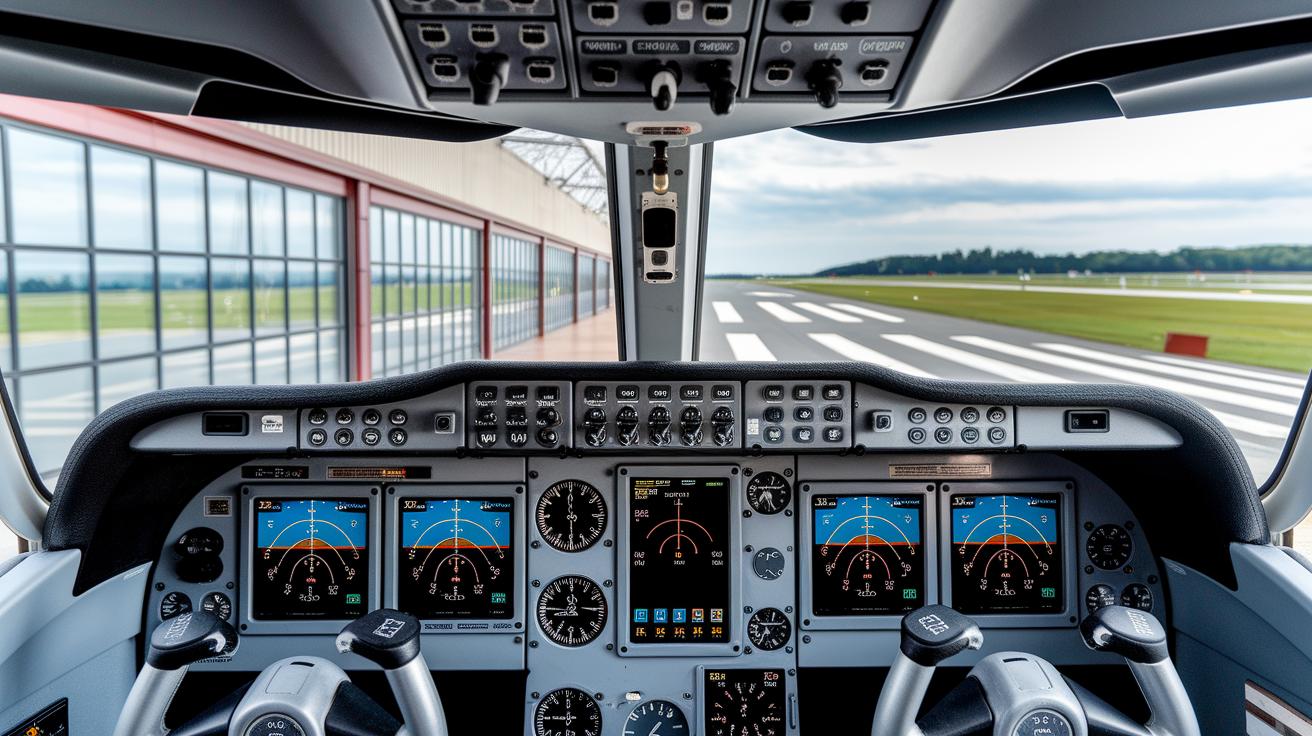
V1 is the speed where pilots must choose to either abort or continue the takeoff. Up to V1, if there’s a problem like an engine failure, the pilot can safely stop using the remaining runway. Once the plane reaches V1, there isn’t enough runway left to slow down, making it the key speed for this decision.
V1 comes before rotation speed (Vr) and safety climb speed (V2). This order helps ensure that the decision is made while there is still enough runway to stop if needed. For example, when a plane is near its weight limit, a higher V1 is set so that both stopping and taking off are possible.
This speed is set based on careful pre-flight checks and performance data. It tells pilots to commit to takeoff only when the runway length and airplane weight support it. In short, V1 is all about making sure the takeoff is safe.
what is v1 in aviation: A Clear View
V1 is the speed where pilots decide whether to keep going or stop during takeoff. At this speed, the distance needed to stop equals the distance needed to continue flying safely. In pre-flight checks, pilots work out V1 using performance charts or their flight management system. They consider details like the airplane's weight, runway length, air temperature, altitude, wind, and flap settings.
In warm, high-altitude conditions or when the plane carries extra weight, V1 gets higher so there is enough runway to lift off safely. Changes in flap settings and other conditions also play a part to ensure that if an engine fails after reaching V1, the plane can still take off, while a stop before reaching V1 remains a safe option.
Key Variables Influencing V1
- Aircraft Gross Weight
- Available Runway Length
- Pressure Altitude & Temperature
- Wind Speed & Direction
- Flap Configuration
| Variable | Definition | Effect on V1 |
|---|---|---|
| Aircraft Gross Weight | The total weight of the airplane at takeoff | A heavier plane raises V1 |
| Runway Length | The distance available for takeoff | A shorter runway may require a higher V1 |
| Pressure Altitude & Temperature | The altitude and air temperature at takeoff | Higher altitude and temperatures increase V1 |
| Wind Speed & Direction | The movement of air relative to the runway | Headwinds can lower the required V1 |
| Flap Configuration | The settings that adjust wing lift during takeoff | Different setups change the V1 value |
V1 Versus Vr and V2: Comparative Analysis of Critical V-Speeds
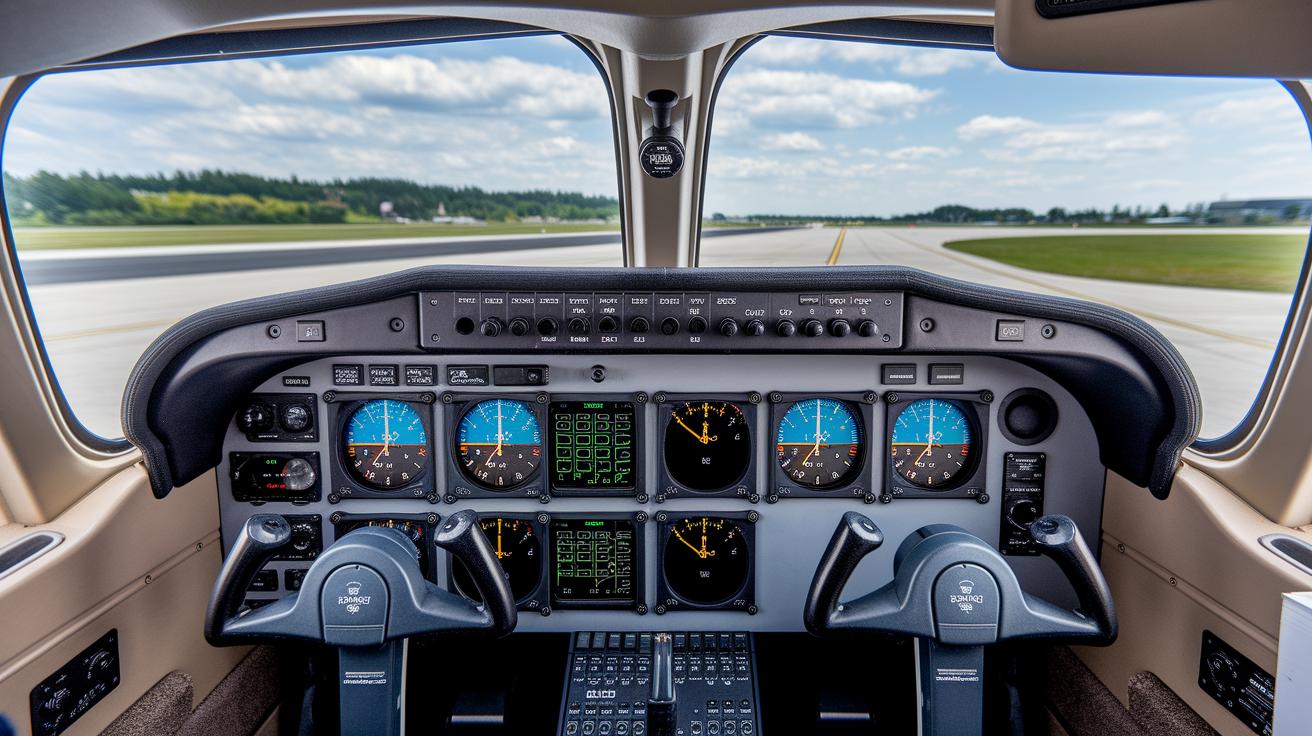
V1 is the speed at which a pilot must decide whether to continue the takeoff if something goes wrong. It is not the point when the plane leaves the ground. Instead, it marks the moment after which stopping safely becomes impossible. In a typical takeoff, the aircraft first reaches V1. After that, the pilot begins the rotation process at Vr and, finally, the plane gains speed to hit V2. V2 is the speed needed for a safe climb even if one engine stops working. Certification from authorities like FAR 25 or CS-25 confirms that each speed serves its clear and important role. V1 ensures that both stopping and going forward are safe options, Vr signals the start of lifting the nose for takeoff, and V2 guarantees that the plane climbs steadily.
Understanding Vr
Vr is the speed at which the pilot starts to lift the plane’s nose. This action is timed perfectly to create the right amount of lift at takeoff without stressing the aircraft.
Understanding V2
V2, often called the takeoff safety speed, ensures that the plane can safely climb even if an engine fails. It sets the minimum speed required for a steady ascent after takeoff.
| Speed | Definition | Operational Role | Typical Value Range (knots) |
|---|---|---|---|
| V1 | Decision speed to abort or continue takeoff | Choose to stop or go | 100-150 |
| Vr | Rotation speed for beginning nose lift | Start lifting off | 110-160 |
| V2 | Takeoff safety speed | Ensure safe climb performance | 120-180 |
Regulatory Standards for V1: FAA, EASA, and Certification
The FAA and EASA set clear rules for deciding what V1 means and how it works during takeoff. To get certified, an aircraft must meet strict criteria that prove its V1 meets safety standards. Even the ICAO uses a standard naming system for V-speeds so everyone stays on the same page. This approach makes sure every plane meets key safety and performance goals before it carries passengers.
Manufacturers also have to show that a plane’s accelerate-stop and accelerate-go distances are balanced according to FAR 25 or CS-25 standards (rules that set safety limits for aircraft performance). They use many flight tests to ensure the calculated V1 matches the real-world performance of the airplane. This way, pilots can trust that the aircraft will handle both aborting and continuing takeoffs as expected.
In short, these rules help keep every stage of departure safe. Every aspect of V-speed performance is closely checked, giving pilots and operators confidence during those critical takeoff moments, no matter the conditions.
Real-World V1 Applications: Case Studies in Safety Scenarios

In everyday flight operations, V1 is a key number. It tells pilots the last moment to decide whether to stop or continue the takeoff if something goes wrong. This speed forms part of what's called balanced field operations, where the distance needed to stop is the same as the distance needed to keep going. Flight crews train hard in simulators to make quick choices at V1, ensuring they know when to reject or continue the takeoff. These careful steps show how the right calculation of V1 helps to keep runway procedures safe.
Real-life examples show how V1 affects both performance and safety. For instance, when an engine failed at 0.8 V1, the crew was able to bring the aircraft to a safe stop. In another case, a failure at 1.1 V1 meant the pilot had to take off and climb with just one engine, counting on the plane's design to meet safety standards. These cases point out the differences between stopping distances and going distances and highlight why following safety rules matters.
- Case 1: An engine failure at 0.8 V1 allowed a safe stop.
- Case 2: A failure at 1.1 V1 required continuing takeoff with a single engine.
Final Words
In the action, this article broke down what is v1 in aviation by explaining its role as the takeoff decision speed and its safe stop or continue options. We covered how V1 is calculated, its balance between accelerate-stop and accelerate-go distances, and how it compares to Vr and V2 speeds. The post also reviewed regulations and shared real-world case studies that show V1 in practice.
Stay informed, keep travel plans on track, and enjoy safer flights ahead.
FAQ
What is V2 in aviation?
V2 speed in aviation refers to the safety climb speed that an aircraft must achieve after takeoff. It ensures the aircraft reaches a proper climb rate for clearing obstacles, even with one engine inoperative.
What is V1 in aviation, and what does it signify?
V1 speed is the takeoff decision speed. When pilots reach V1, they must continue the takeoff if a failure occurs, as trying to abort beyond that point could be unsafe on the remaining runway.
What is Vr speed in aviation?
Vr speed is the rotation speed. At this speed, the pilot begins to lift the nose of the aircraft from the runway, signaling the transition from the ground roll phase to actual flight.
How can V1 be expressed in kilometers per hour?
V1 speed is usually measured in knots but converts to kilometers per hour by multiplying by 1.852. This helps pilots understand speeds in regions that use the metric system.
Can you explain the relationship among V1, Vr, and V2?
V1, Vr, and V2 are key speeds during takeoff. V1 is the decision speed, Vr marks the start of rotation, and V2 is the safety climb speed, assuring a proper climb rate and obstacle clearance after takeoff.
What does “V1 rotate” mean, and why do pilots say it?
“V1 rotate” means that once V1 is reached, the decision to take off is made and the aircraft begins to rotate for lift-off. Pilots use it to signal that speed thresholds have been met for safe takeoff.
What does V1 stand for in aviation?
V1 stands for the takeoff decision speed. It is the critical point during the takeoff roll where the pilot must choose between aborting or continuing the takeoff based on safety considerations.
How do you calculate V1 in aviation?
Calculating V1 involves balancing accelerate-stop and accelerate-go distances. Factors such as aircraft weight, runway length, temperature, pressure altitude, wind conditions, and flap settings are used with performance charts.