

Have you ever stopped to think how one event can change air travel forever? Even when an incident doesn't cause a full loss of the plane, it means the industry takes a hard look at its processes. Recent data shows that major failures are becoming rarer, but each event still teaches us something valuable about safety and pilot training. This article breaks down key events and numbers to show how past lessons lead to safer skies for everyone.
Commercial Airline Incidents Spark Clear Insights

A crash happens when a commercial plane suffers serious damage or loses control. A hull loss means the aircraft is ruined beyond repair. Knowing the difference helps us understand overall flight accident numbers.
Crashes can occur during any part of a flight. Even if a crash does not lead to a hull loss, it still prompts a review of safety procedures. A hull loss is a stricter measure that shows major structural or system failures. Experts track both hull loss rates and fatality rates (deaths per million flights) to see how airline safety is improving worldwide.
- Total U.S. crash counts when comparing 2024 versus 2025
- Number of fatal commercial crashes
- Global fatal crash count along with flight volume
- Fatality rate per million departures
- Hull loss rate (aircraft damaged beyond repair)
Recent data indicates there were about 153 crashes in the U.S. in 2025, including 23 fatal incidents. In 2024, there were roughly 1,417 crashes with 258 deaths. Worldwide, out of 40.6 million flights, 7 fatal crashes resulted in 244 fatalities. These figures show that, although incidents continue, fatality and hull loss rates are declining.
This trend suggests that better pilot training, improved safety management, and modern technology are making flights safer. Travelers can feel reassured that continuous improvements in safety and risk management are in place, even as the statistics highlight areas needing further attention.
Timeline of Major Commercial Airline Incidents and Their Impact

This timeline shows key airline accidents that changed aviation safety. These major events, chosen for their high fatality counts and big impact on the industry, led to tougher safety rules and better crew training. By looking back at these tragedies, we can see how lessons learned continue to improve airline regulations and pilot practices around the world.
| Incident | Date | Fatalities |
|---|---|---|
| Tenerife Airport Disaster | March 27, 1977 | 583 |
| Turkish Airlines Flight 981 | March 3, 1974 | 346 |
| Japan Airlines Flight 123 | August 12, 1985 | 520 |
| Air India Flight 182 | June 23, 1985 | 329 |
| Charkhi Dadri Mid-Air Collision | November 12, 1996 | 349 |
| American Airlines Flight 191 | May 25, 1979 | 273 |
| China Airlines Flight 611 | May 25, 2002 | 225 |
These heartbreaking incidents spurred new safety measures and tech updates that shaped the modern approach to flight safety. Each event reminded the aviation world that safety must always come first.
Root Cause Analysis of Commercial Airline Incidents

Human Factors in Incidents
Pilot error, along with poor cockpit management, plays a role in roughly 80% of aviation mishaps. Long duty hours, miscommunications between crew members, and rushed decisions during high-pressure moments often lead to these incidents. For example, unclear communication during takeoff or landing can result in a wrong move that makes recovery even harder later on. Fatigue and stress from irregular work schedules lower alertness and disrupt team coordination.
Technical and Mechanical Failures
Technical problems are another key factor in airline mishaps. Older aircraft may have design flaws, and poor maintenance can turn these issues into serious problems. Past events, like the crashes of American Airlines Flight 191 and China Airlines Flight 611, show that skipped maintenance steps can be deadly. Engine troubles or other system failures highlight why airlines need strict and regular technical checks. Even a small maintenance slip can grow into a big safety risk.
External and ATC-Related Errors
Errors from air traffic controllers and outside challenges also add to the risks. For instance, a lapse in controller judgment was a major factor in the Charkhi Dadri collision where miscommunication led to a tragic outcome. Bad weather can worsen these problems by confusing the guidance that controllers provide. In rare cases, deliberate harm, as seen in the bombing of Air India Flight 182, shows that external factors can suddenly change the situation. All these issues underline the need for careful checks at every step of flight operations.
Flight Safety Investigations in Commercial Airline Incidents

The National Transportation Safety Board (NTSB) investigates airline accidents by visiting crash sites and carefully mapping the debris. They gather data from flight recorders (often called black boxes) and cockpit voice recorders. This helps them retrace the flight path and study the crew's actions to see if mistakes, equipment problems, or weather issues played a part.
Investigators stick to a clear process when examining crash sites. They recover data from the black boxes and inspect every piece of wreckage. This detailed approach helps them spot any changes during key moments of the flight. They also check the damage using a system that shows whether the plane was completely destroyed or only lightly damaged. Both the FAA and international rules require fast and thorough reports, so no important detail is missed.
Data from the black boxes is crucial for making future flights safer. The flight recorders reveal when things went off track, while the cockpit voice recorders capture how the crew communicated and made decisions. These findings guide improvements in pilot training, aircraft design, and overall safety measures.
Prevention Strategies and Incident Trend Analysis in Commercial Aviation

Recent NTSB data shows that fatal events on commercial flights have dropped steadily over the years. Better aircraft technology, strict maintenance, and updated flight rules have all helped make flying much safer. In short, improved safety measures and careful risk management really work.
In the United States, Alaska Airlines leads the way in safety. Delta Air Lines also stands out, thanks to its strong focus on safety management and pilot training which keeps incidents very low. These examples show that airlines are using data and performance checks to tidy up operations and make smart changes when needed.
Key prevention tools like Safety Management Systems (SMS, which help manage risks) and Crew Resource Management (CRM, training that hones team communication) have become vital in cutting down risk. Airlines follow clear, structured plans to boost communication and sharp decision-making during critical flight moments. They keep training fresh by simulating real-life scenarios, so crews know exactly how to stay calm and act quickly during unexpected events.
Big data analytics is also reshaping risk management. By spotting early warning signs, airlines can fix small issues before they grow into bigger problems. Predictive models and continuous monitoring let airlines fine-tune safety measures on the fly. This blend of smart technology and proactive planning shows that when airlines take the right steps, overall flight safety improves a lot.
Future Outlook for Commercial Airline Incident Reduction
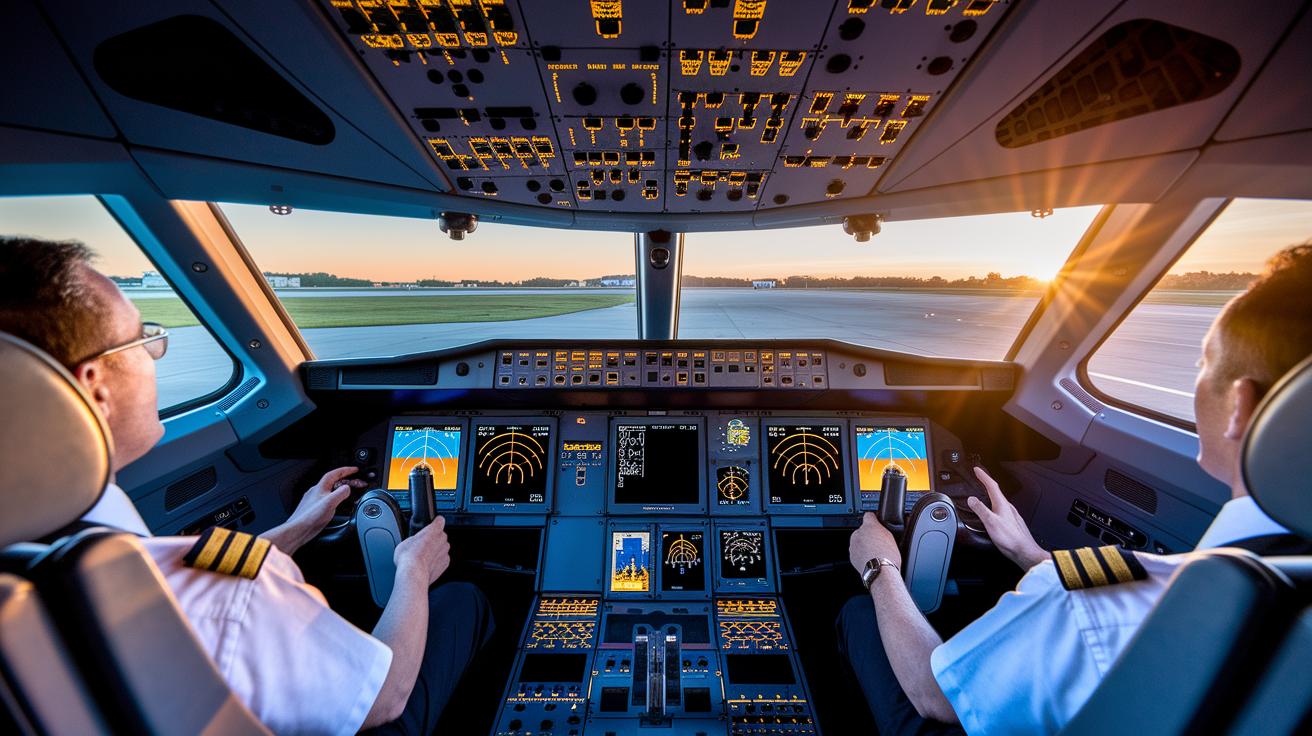
Airlines are now using more automation and strict safety standards to cut down on human errors. New cockpit systems help lower mistakes during takeoff and landing. Constant upgrades to software and hardware make managing flights more efficient. These changes help crews stay focused and less tired, which in turn reduces incidents. Even older systems are being updated with emerging technology to boost safety.
Predictive accident models are changing the way risks are spotted and handled. Airlines now analyze large amounts of flight data to find small trends and flag potential problems early. Smart computer programs estimate the chance of malfunctions and offer steps to fix them before they become serious. This helps maintenance teams act on time and keep flights running safely. In short, the data-driven approach gives crews early warnings to stop small issues from growing into major incidents.
Next-generation diagnostics are set to change real-time system health checks. Soon, AI-driven risk alerts will appear directly on cockpit screens, giving pilots immediate feedback while in flight. This new feature boosts situational awareness and lets pilots react quickly to any issues. Over time, these improvements promise smoother flights and even fewer incidents, making air travel safer for everyone.
Regulatory and Legal Implications of Commercial Airline Incidents

When an incident happens, the National Transportation Safety Board (NTSB) starts a close investigation. They pull data from flight recorders and study the scattered wreckage to find what went wrong. Their solid evidence often leads the Federal Aviation Administration (FAA) and international groups to update current rules and standards.
Regulators then use this new information to push for stricter operating and maintenance practices. They conduct thorough reviews to fix any weaknesses in both the procedures and the equipment.
Families and victims can also file legal claims against the airlines or the companies that made the aircraft. Aviation lawyers, who specialize in these cases, work through tricky liability issues that can change with local laws. Some court cases even show that the outcomes help airlines improve their safety checks. For example, one well-known case led to tougher technical inspections for certain types of planes.
The process for claiming compensation depends on where you are and how serious the incident was. Courts look at clear signs of negligence, whether the airline followed safety rules, and the financial losses incurred. These legal decisions push the industry to adopt safer practices and set clearer rules for compensation.
Final Words
In the action of breaking down numbers, we saw how crash counts, fatality rates, and hull loss figures play a role in shaping airline safety. The analysis covered major incidents, human and technical factors, along with safety investigations and prevention measures. We also reviewed trends and new technologies that are setting the stage for a safer future. Understanding these details helps make more informed travel decisions amid evolving commercial airline incidents. Keep learning and planning for smoother travels ahead.
FAQ
When was the last commercial airplane accident?
Which airline has the worst accident record?
How many commercial airline accidents happen per year?