

What if a single weak link lets hackers grab flight control information? Airlines are working hard to secure every part of their systems. A recent ransomware hit at several European airports made it clear how dangerous it is when important flight data lands in the wrong hands.
To fight these threats, airlines now use strict security systems and regular risk checks. They follow rules and advice from regulators like the FAA (Federal Aviation Administration) and ICAO (International Civil Aviation Organization). These steps help build a strong defense that keeps digital systems as safe as your seatbelt on a flight.
This approach is all about protecting travelers. By tightening security, airlines aim to make sure your journey from check-in to takeoff remains safe and worry-free.
Comprehensive Cybersecurity Framework for Airline Operations
Airlines need a smart, step-by-step plan to protect their data. The September 2025 ransomware attack on European airports showed how valuable flight data is. Now, airlines follow clear guidelines from the FAA Cybersecurity Guidance (AC 120-92B) and the ICAO Aviation Cybersecurity Strategy to keep their systems safe.
A key part of this plan is a zero-trust system. This means no one or nothing inside the system automatically gets full trust. Every user and device must prove they are allowed to connect. Airlines also set strict rules for all their technology partners, from flight planning to customer service, to help stop data leaks.
They use special tools that look for weaknesses in flight software and communication systems. Air-gapped backup systems keep core operations running if there is an attack. Behavioral analytics help spot insider problems by flagging odd behavior or changes in usual patterns.
Modern defenses also use artificial intelligence (AI) and machine learning to spot unusual activities in real time. This helps airlines catch threats before they become serious breaches. All these measures work together to protect every part of airline operations, keeping both digital and physical systems secure.
For example, if an unusual change in flight data is spotted, it can trigger an immediate check of who is accessing the system. This makes the network quick to respond and strong against cyber threats.
Risk Assessment and Management Protocols for Airlines
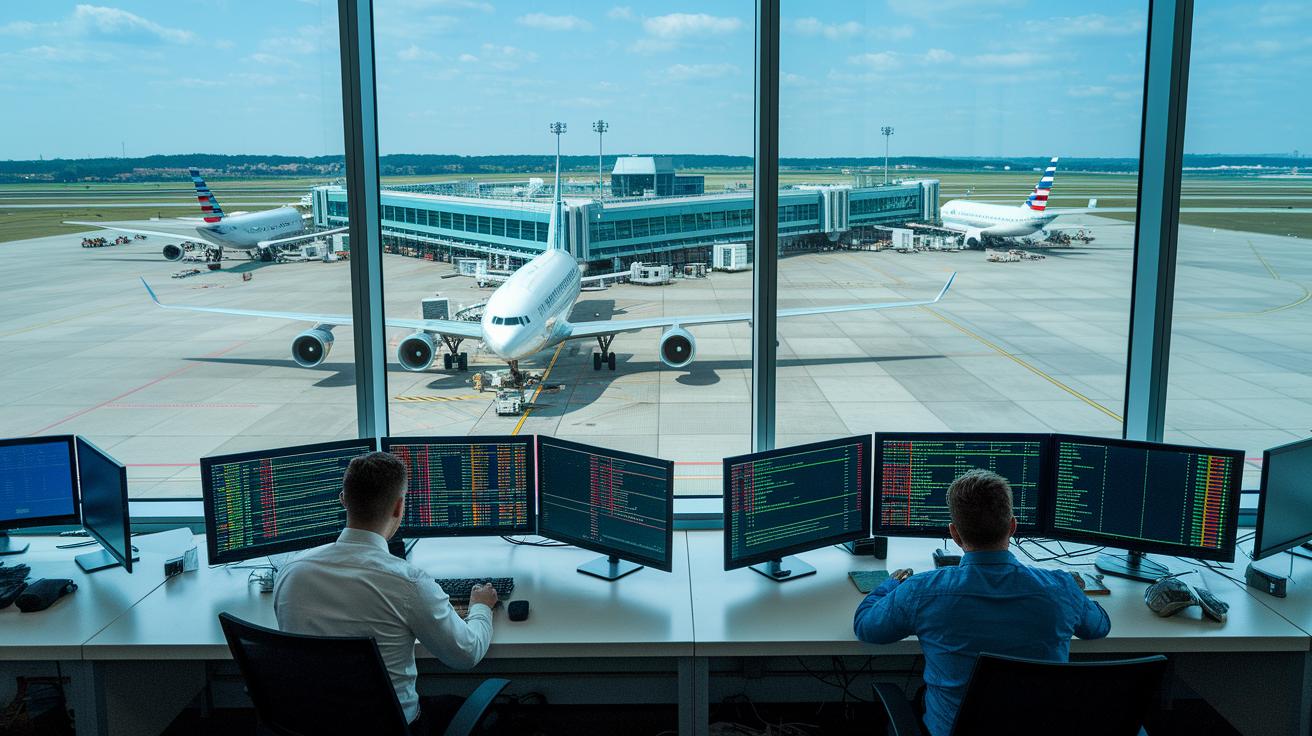
Airlines run regular checks to keep their systems safe. They use easy-to-understand scores and simple tests to find risks and spot weak points in flight operations. Regular scans and tests, done according to FAA and ICAO rules, make sure the security steps are still working. These checks often find issues in flight planning software, maintenance tracking, and communication systems.
At busy hubs like Singapore Changi (SIN) and London Heathrow (LHR), thorough risk checks helped cut major vulnerabilities by 30%. This shows that using both financial and operations data with realistic test scenarios works well.
Experts suggest that airlines do a full security audit every year. They also recommend targeted reviews every quarter to update risk profiles, check progress, and handle new threats. By spotting high-risk elements early, airlines can fix problems faster and avoid bigger disruptions.
Structured risk checks and regular audits build a strong line of defense against cyber threats. These steps help airlines keep a close watch on every part of their operations, ensuring safe skies for everyone.
Secure Aviation Communication and Network Protection Best Practices
Airlines rely on safe data transfers to keep flight operations, passenger messages, and maintenance alerts running smoothly. To protect these essential links, they use strong encryption methods like AES-256 and SSL/TLS (protocols that secure digital information). These tools ensure that any data traveling between systems stays private and correct.
Airlines also split their networks into two parts: operational technology (OT) for flight systems and information technology (IT) for other functions. This separation helps stop problems in one area from affecting critical flight systems. In addition, devices that block large-scale traffic attacks (anti-DDoS) and systems that detect and stop intrusions (IDS/IPS) work hard to monitor and block any unusual traffic at main network entry points.
Satellite communications connect aircraft with ground teams. To protect these links, airlines use techniques like frequency hopping, endpoint authentication (confirming the identity of connected devices), and firmware checks. Together, these steps build a strong network that resists hacks and technical glitches.
Key protection measures include:
- End-to-end encryption of telemetry and voice
- Network micro-segmentation by avionics function
- Routine security testing of ground-to-air links
- IDS/IPS deployment at all network entry points
- Strong authentication for remote maintenance
- Hardened satellite communication protocols
Flight Data Protection Guidelines with Encryption and Access Controls

Airlines need strong encryption to keep their data safe. They use AES-256 to lock flight logs and maintenance records when stored, just like securing files in a high-security safe. For information in transit, such as ACARS messages (a system that sends and receives data), airlines use TLS 1.3. This makes sure that data moving between systems stays hidden from outsiders.
Airlines also rely on a public key infrastructure (PKI) to manage digital certificates for cockpit display systems. Think of PKI as a digital ID card that confirms each part of the system is genuine and responsible. This extra check is key for keeping flight-critical communications secure.
Access controls add another layer of safety. Ground operations use role-based access control (RBAC), which means each worker only sees the data they need for their job. They also use multi-factor authentication, like needing both a key and a fingerprint to unlock your phone, to make sure only verified users gain access.
A great example of these measures is an air-gapped backup system. After a ransomware attack, this system helped restore critical operations in just four hours. It shows how strong encryption and strict access controls can work together to protect flight data from any unauthorized changes.
Cyber Defensive Strategies in Aircraft Operations
Airlines use a strong cybersecurity system that now includes special measures for each aircraft. They rely on a zero-trust approach (only letting systems connect to what they really need) along with smart access controls. For instance, if a device that usually checks flight details suddenly asks for maintenance information, the system spots the change right away.
Airlines also use AI-powered tools to keep a close watch on flight-management logs. These machine-learning tools track flight data in real time and alert teams when something seems off. Added features like unchangeable audit logs and ready-forensics steps help teams review any issues quickly and thoroughly.
Proactive Incident Response Planning for Airlines

Airlines need strong plans to handle cyber-attacks and other digital emergencies. They use detailed step-by-step playbooks that tell the team what to do if a ransomware hit, a data breach, or an attack on industrial control systems (ICS) occurs. Typically, the team includes an Incident Manager, a Forensics Lead (who gathers technical evidence), a Communications Lead, and Legal Counsel. For example, if a ransomware attack strikes, the playbook instructs the team to isolate the affected systems while the forensics lead collects the evidence needed to understand what happened.
Regular practice drills are a key part of keeping the response plan effective. Every year, teams hold tabletop exercises where they discuss and plan for possible scenarios in a structured setting. Every six months, live-fire drills bring together the operational technology (OT) team and the information technology (IT) team so they can practice making real-time decisions. Additionally, every quarter external experts, known as pentesters, test the system by trying to find weaknesses.
The aim is to restore critical flight systems within 6 hours after an incident. This quick recovery helps reduce downtime and keeps flight operations safe.
| Exercise Type | Frequency | Participants |
|---|---|---|
| Tabletop Scenarios | Annually | IT, OT, Crisis Team |
| Live-Fire Drills | Semi-Annually | Full IR Team, Vendors |
| Red-Team Engagement | Quarterly | External Pentesters |
Best practices in airline cybersecurity: Safe skies ahead
Airlines use solid cybersecurity methods to keep sensitive data and digital systems safe. They meet rules from the FAA, ICAO, GDPR, and PCI-DSS to protect passengers and their payments. Top leaders like the executive committee and CISO (chief information security officer) guide a team that sets clear rules and strategies for security.
Airlines also check their vendors carefully. They complete standard security questionnaires and use contracts with set service levels to ensure every partner follows strict guidelines. This step helps lower any risks tied to flight planning, maintenance, or customer management.
Regular training keeps everyone alert and ready. Staff learn about spotting phishing emails, stopping social engineering, coding safely for flight software, and how to report issues quickly. One test even showed that 40% of participants clicked a fake email, which led to extra training sessions that made them more cautious.
All these efforts work together to create a sturdy cybersecurity culture. Using top-down governance, vendor reviews, risk checks, and ongoing training, airlines build a digital environment that meets regulations and stays strong against new cyber threats.
Best practices in airline cybersecurity: Safe skies ahead

Singapore Changi Airport's new safety rules show how a layered approach can work. In one year, they cut intrusion attempts by 45%. London Heathrow Airport used AI-driven cameras and smart sensors to spot problems, slashing detection time from 72 hours to just 3 hours. These real-world examples show what airlines can do with a clear, step-by-step plan.
Airlines can kick things off with an Assessment phase in the first 0–2 months. In this stage, teams list key systems, check for weak spots, and compare threats to industry benchmarks. For example, one airline looked at its flight management systems and found that old methods were not enough. They quickly switched to better analytics to catch issues sooner.
Next comes the Design phase, which lasts 3–5 months. Here, cybersecurity experts build a plan that covers both technical and everyday needs. This plan includes strong encryption (scrambling information so only the right people can see it) and updated network setups. One case showed that rethinking these protocols helped cut down the number of ways hackers could break in.
Then, in the Deployment phase from months 6 to 9, airlines put the new measures to work. They update software, adjust systems following best practices, and set up ongoing monitoring. This phase turns ideas into action. One airline reported that using advanced sensors and tightening remote access controls made a big difference in their overall safety.
Finally, the Review & Continuous Improvement phase runs from 10–12 months. During this time, continuous monitoring and regular audits keep the systems strong. Key targets such as 99.9% system uptime and recovery in under 6 hours, plus a 100% pass rate on annual audits, help maintain these high standards.
When airlines put these phases together, they boost both security and confidence in their operations. Each step builds on the previous one, creating a roadmap that spreads best practices in cybersecurity, protects flight operations, and keeps the skies safe.
Final Words
In the action, the article broke down a clear cybersecurity framework for airlines. We outlined risk management, secure communications, data protection, and incident response strategies.
Each section offered real steps, from encryption and zero-trust architecture to continuous training.
Adopting the best practices in airline cybersecurity helps secure vital operations and keeps travel safe. Positive changes are set to shape a more secure future in air transport.
FAQ
What do airline cybersecurity best practices cover?
The airline cybersecurity best practices cover risk management, threat detection, encryption, employee training, and regulatory compliance. They form a multi-layered framework to protect both IT systems and operational technology.
What is the aviation cybersecurity strategy?
The aviation cybersecurity strategy uses a multi-step approach that features zero-trust architecture, threat intelligence, and regular audits. It aligns with ICAO and FAA guidelines to reduce risk across all aviation systems.
What skills are essential for airport cybersecurity jobs?
The skills needed for airport cybersecurity jobs include network protection, proactive threat detection, compliance management, and incident response expertise. These abilities help secure both IT systems and operational networks.
What are the 5 C’s and 5 D’s of cybersecurity?
The 5 C’s and 5 D’s of cybersecurity outline key control areas and incident response steps. They often cover critical controls like communication and continuity, paired with actions to detect, deny, disrupt, degrade, and recover from threats.
What are general best practices in cybersecurity?
General cybersecurity best practices emphasize strong access controls, regular vulnerability scans and penetration tests, robust encryption methods, comprehensive training for staff, and an effective incident response plan to manage threats.